


Why 80% of enterprise AI projects never reach production

The failure rate is not a mystery
When S&P Global reported that the share of companies abandoning most AI initiatives increased from 17% to 42% between 2024 and 2025, the number surprised many observers. It should not have. The failure modes are consistent, predictable, and almost entirely preventable with the right process.
We have delivered AI implementations and or consulted over 220+ enterprise and mid-market organizations over 25 years, accounting partner experience. We've found similar patters across all engagements across over 15 industries. Today we'll talk about how we can combat the patterns of failure we see and how to let facts guide our business, not feelings or FOMO, which is what we see far too often nowadays.
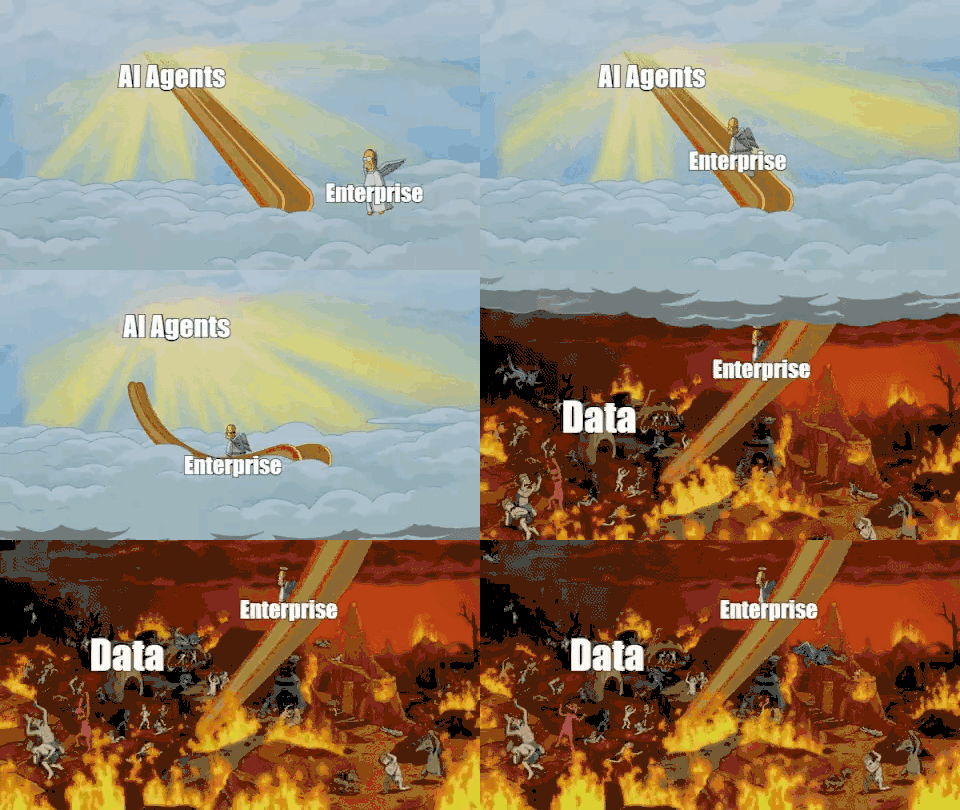
Why Enterprise AI Projects Fail
Most AI projects do not fail because the model was not good enough.
They fail because the business problem was poorly defined, the data was weaker than expected, the workflow never changed, or nobody could prove the system created meaningful value.
A prototype proves something can work.
Production proves it can survive. Value proves it should exist.
What failure actually looks like
An AI project can technically “work” and still fail.
It may never leave the pilot stage. Employees may barely use it. It may reach production without improving revenue, cost, speed, risk, or decision quality. Or it may depend so heavily on one champion or implementation team that it cannot survive without them.
At PezScales, we think success is simpler:
Solve an important business problem, put the solution into the real workflow, and create measurable value.
Where projects usually break
1. They start with AI instead of the problem.
“Where can we use AI?” is usually the wrong question.
Start with where the business is losing money, time, capacity, customers, or decision quality. Then determine whether AI is the right tool.
2. The AI does not understand the business.
Enterprise intelligence lives across databases, documents, systems, workflows, and people.
The hardest information to capture is often tacit knowledge: what experienced operators know but have never written down.
AI needs context, not just data.
3. Companies confuse a demo with a solution.
Modern AI makes prototypes easy.
Production is harder.
Security, integrations, reliability, governance, ownership, user experience, and exception handling all determine whether something actually works inside a company.
4. They automate tasks instead of redesigning work.
Putting AI into a broken process does not transform the business.
The better question is:
If we designed this workflow today, knowing what AI can do, would we build it the same way?
Usually not.
5. Nobody owns the outcome.
Technology understands the system. Operators understand the work. Executives understand the economics.
Successful transformation requires all three.
This is also why the line between consultant and engineer is beginning to blur. The best builders will understand the business problem, the technology, and the outcome they are responsible for creating.
What successful companies do differently
They diagnose before they build.
They start with high-value problems.
They bring technical talent and industry expertise together.
They redesign workflows instead of layering AI onto old ones.
They plan for production from day one.
And they measure business outcomes instead of AI activity.
The technology matters.
But as AI makes software easier to build, the scarce skill becomes knowing:
What should we build?
Why does it matter?
How should the business change around it?
And did it create value?
The winners will not be the companies that deploy the most AI.
They will be the companies that get the most value from it.